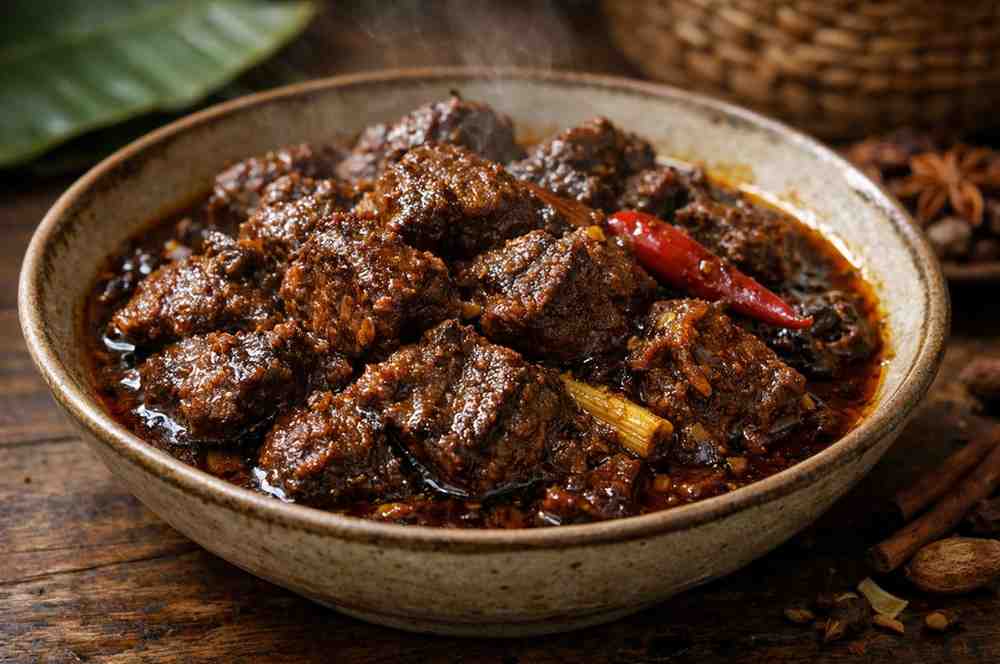
Few dishes in the world inspire as much devotion as Beef Rendang. Dark, glossy, intensely aromatic, and deeply spiced, Rendang is not just a meal—it is a culinary ritual. Originating from Indonesia and loved across Southeast Asia, this slow-cooked beef dish represents patience, celebration, and the mastery of spice.
To taste a good Beef Rendang is to experience layers upon layers of flavor unfolding slowly, just as the dish itself takes hours to reach perfection.
What Is Beef Rendang?
Beef Rendang is a dry-style curry made by slowly simmering beef in coconut milk and a complex spice paste until the liquid evaporates and the meat becomes tender, caramelized, and infused with spices.
Unlike saucy curries, a true rendang is thick, dark, and almost dry, with the spices clinging tightly to the meat. The dish originates from the Minangkabau people of West Sumatra, Indonesia, where it is traditionally served during ceremonies, weddings, and important communal gatherings.
A Dish Built on Time and Patience
Rendang is famous not only for its flavor but also for its time-intensive cooking process. The beef is cooked slowly over low heat for several hours, allowing the coconut milk to break down into oil while the spices deepen and concentrate.
This slow transformation is essential. Rushing rendang results in curry; respecting time creates rendang.
Traditionally, rendang was designed to last for days, even weeks, without refrigeration. The long cooking process and heavy spices act as natural preservatives, making it ideal for travel and feasts in earlier times.
The Heart of Rendang: Ingredients and Aromatics
Key Components
- Beef (chuck or shank) – Becomes tender during long cooking
- Coconut milk – Rich, fatty, and essential for depth
- Galangal – Earthy and citrusy
- Lemongrass – Fresh and aromatic
- Kaffir lime leaves – Bright, floral notes
- Garlic and shallots – The savory backbone
Spices That Define Rendang
- Dried chilies
- Turmeric
- Coriander seeds
- Cumin
- Nutmeg or cloves (in some versions)
These ingredients are ground into a spice paste (bumbu), which forms the soul of the dish.
The Cooking Stages of Rendang
Rendang evolves through distinct stages:
- Gulai stage – Simmering curry-like consistency
- Kalio stage – Thickened sauce with intensified flavor
- Rendang stage – Oil separates, sauce reduces, beef caramelizes
True rendang exists only at the final stage.
Cultural Meaning and Symbolism
In Minangkabau culture, rendang is deeply symbolic:
- Beef represents leadership and strength
- Coconut milk symbolizes unity
- Chilies stand for courage
- Spices reflect diversity within harmony
Serving rendang is an act of respect, hospitality, and community.
Regional and Global Variations
While Indonesian rendang is the original, neighboring countries have developed their own styles:
- Malaysian Rendang – Slightly wetter and sweeter
- Singaporean versions – Rich and aromatic
- Sri Lankan interpretations – Drier and bolder
Modern adaptations include chicken rendang, lamb rendang, and jackfruit rendang for vegetarian diets.
How Beef Rendang Is Served
Beef Rendang is commonly served with steamed white rice, coconut rice (nasi lemak), or compressed rice cakes such as ketupat or lemang. It’s often part of a larger spread alongside sambals and vegetable dishes.
Why the World Loves Rendang
Beef Rendang consistently ranks among the world’s greatest dishes thanks to its deep umami richness, complex spice balance, melt-in-the-mouth texture, and rich cultural history.
Final Thoughts
Beef Rendang teaches us that great food cannot be rushed. It rewards patience, respect for ingredients, and attention to process.
In a fast-paced world, rendang remains gloriously slow. Whether enjoyed fresh or reheated the next day—when it tastes even better—Beef Rendang is not just food. It is tradition, endurance, and love, simmered down to perfection.