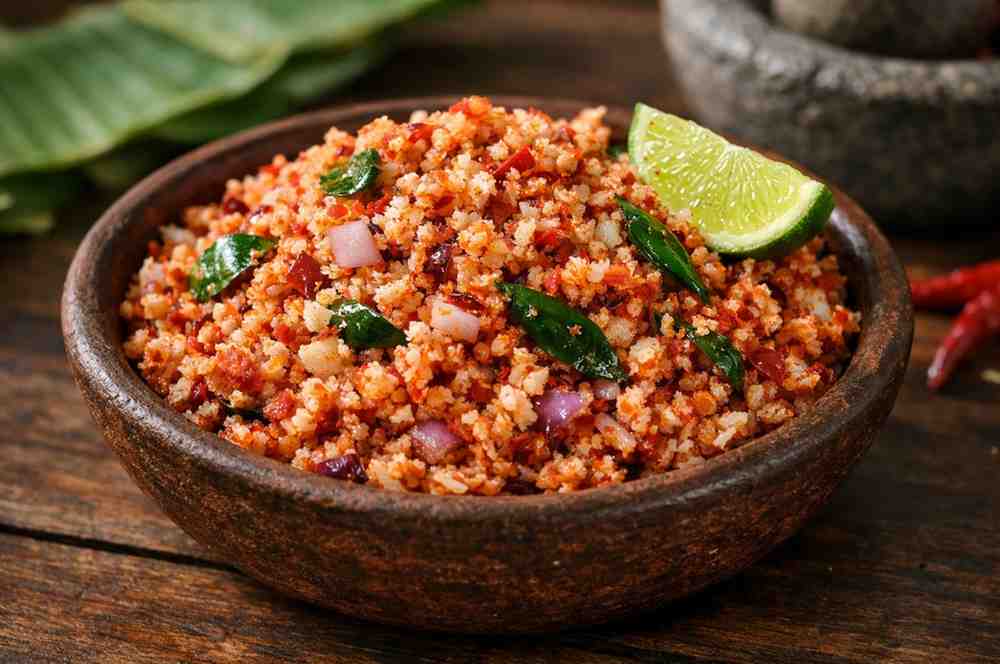
In Sri Lanka, food is more than sustenance—it’s memory, identity, and ritual. Among the island’s vast culinary landscape, Pol Sambol stands out as one of the most beloved and elemental dishes. Simple in ingredients yet bold in flavor, this fiery coconut relish appears on breakfast tables, lunch plates, and festive spreads alike. To understand Sri Lankan food culture, you must understand Pol Sambol.
What Is Pol Sambol?
Pol Sambol (also spelled pol sambola) is a fresh coconut relish traditionally made with grated coconut, red chili, lime juice, salt, and onion. The word “pol” means coconut in Sinhala, and “sambol” refers to a type of condiment or side dish. Despite its humble nature, Pol Sambol delivers a powerful punch—spicy, tangy, slightly sweet, and deeply aromatic.
Unlike chutneys or cooked sambols, Pol Sambol is usually uncooked, relying on fresh ingredients and manual grinding to create its signature texture and flavor. This raw preparation keeps the coconut bright and fragrant, making it both refreshing and intense.
A Dish Rooted in Daily Life
Pol Sambol is not reserved for special occasions—it is everyday food, and that’s precisely what makes it special. In many Sri Lankan households, the day begins with string hoppers (idiyappam), hoppers (appa), or bread served with a generous scoop of Pol Sambol.
For lunch, it may accompany rice and curry. In rural homes, it’s often eaten with plain rice and a piece of dried fish, proving that luxury in Sri Lankan cooking lies in flavor, not extravagance.
Because coconuts are abundant across the island, Pol Sambol evolved naturally as a staple. Every household has its own version, passed down through generations, subtly adjusted to personal taste—more chili here, extra lime there, or a pinch of Maldive fish for umami depth.
The Traditional Way: Grinding by Hand
Authentic Pol Sambol is traditionally prepared using a miris gala—a flat stone slab and grinding stone. Dried red chilies and salt are crushed first, followed by onion and finally fresh grated coconut.
This method creates a slightly coarse texture that machines struggle to replicate. While modern kitchens often rely on food processors, many Sri Lankans will tell you that Pol Sambol made by hand simply tastes better.
Key Ingredients and Their Role
Though recipes vary, classic Pol Sambol depends on a few core components:
- Fresh grated coconut – The base of the dish; mildly sweet and creamy
- Dried red chilies or chili powder – Provides heat and color
- Red onion or shallots – Adds sharpness and crunch
- Lime juice – Brightens and balances the spice
- Salt – Essential for bringing everything together
Optional but common additions include Maldive fish (umbalakada) for umami depth and green chilies for extra freshness and heat.
Regional and Modern Variations
Pol Sambol is wonderfully adaptable. Coastal areas tend to use more Maldive fish, while inland versions may lean heavier on chili. Some cooks add black pepper or garlic, while others keep it fiercely minimalist.
Modern variations include Seeni Pol Sambol with caramelized onions, Green Pol Sambol using green chilies, and fully vegan versions that rely on lime and onion for balance.
How Pol Sambol Is Served
Pol Sambol pairs beautifully with string hoppers, hoppers, rice and curry, roti, and even toasted bread or crackers. It can be a side dish, a condiment, or the main event—depending on how much you love spice.
More Than a Recipe
Pol Sambol is emotional geography. For Sri Lankans living abroad, the smell of freshly grated coconut mixed with chili and lime can instantly transport them home. It’s the taste of childhood breakfasts, family kitchens, and hands moving rhythmically over a grinding stone.
Final Thoughts
Pol Sambol may be small in scale, but it is enormous in significance. It represents Sri Lanka’s relationship with coconut, spice, and communal eating.
If you ever want to understand Sri Lankan cuisine, don’t start with the elaborate curries. Start with Pol Sambol. Everything else flows from there.