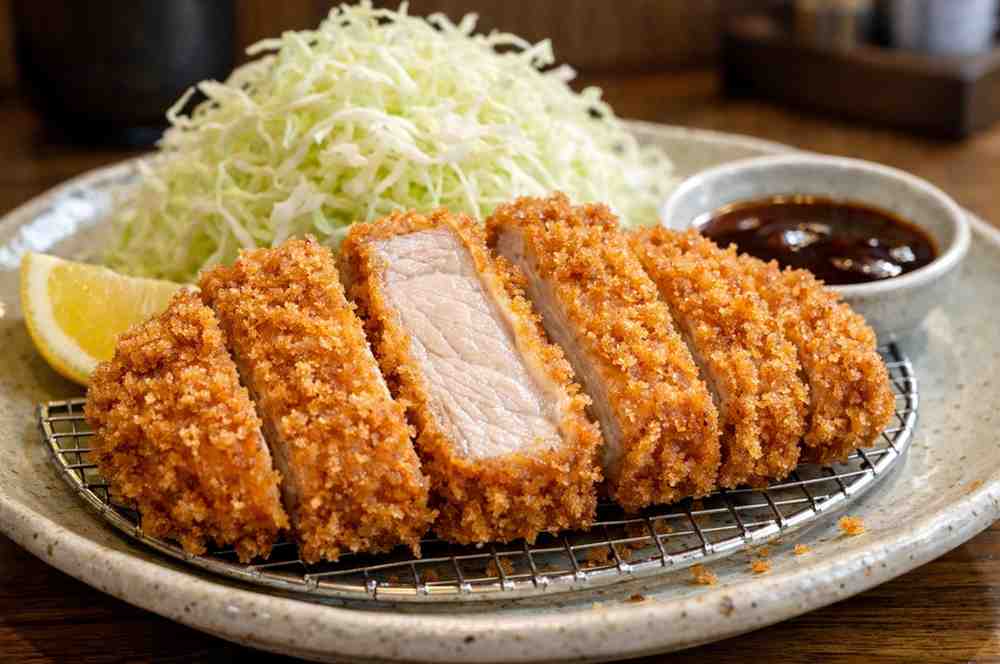
Few dishes capture the balance and precision of Japanese cuisine quite like Tonkatsu. With its crisp golden crust, juicy pork interior, and signature sweet-savory sauce, Tonkatsu is proof that simplicity, when done right, can be extraordinary. Beloved by home cooks, street diners, and fine restaurants alike, Tonkatsu has earned its place as one of Japan’s most iconic comfort foods.
At first glance, it may seem like “just a breaded pork cutlet.” But Tonkatsu is far more than that—it’s a dish shaped by history, technique, and Japan’s unique ability to adapt foreign influences into something entirely its own.
What Is Tonkatsu?
Tonkatsu is a deep-fried pork cutlet, coated in flour, egg, and panko breadcrumbs, then fried until perfectly crisp. The word itself is a combination of “ton” (pork) and “katsu” (cutlet), derived from the English word “cutlet.”
Typically served sliced into neat strips, Tonkatsu is accompanied by shredded cabbage, steamed rice, miso soup, and a thick, tangy Tonkatsu sauce. The contrast between crunchy exterior and tender meat is the heart of its appeal.
A Western Dish, Japanese Soul
Tonkatsu emerged in late 19th-century Japan, during the Meiji era—a time when the country was opening itself to Western culture. Inspired by European breaded meat dishes like schnitzel or côtelette, Tonkatsu was adapted to suit Japanese tastes.
Instead of pan-frying in butter or oil, Japanese cooks used deep-frying techniques similar to tempura. Panko breadcrumbs replaced finer crumbs, creating a lighter, airier crunch. The result was a dish that felt Western in concept but unmistakably Japanese in execution.
The Art of the Perfect Crunch
What sets Tonkatsu apart is its texture. Achieving the ideal crunch without greasiness requires attention to detail:
- Panko breadcrumbs – absorb less oil and create a crisp, flaky crust
- Oil temperature – must be just right to cook evenly without burning
- Resting the meat – allows juices to redistribute for maximum tenderness
A well-made Tonkatsu should shatter slightly under chopsticks, revealing moist, tender pork inside.
Choosing the Right Pork
- Hire-katsu (pork tenderloin) – Lean, delicate, very tender
- Rōsu-katsu (pork loin) – Juicier, richer, with a strip of fat for flavor
Some premium restaurants use Kurobuta (Japanese black pork), prized for its sweetness and marbling, elevating Tonkatsu from everyday comfort food to something luxurious.
Tonkatsu Sauce: The Unsung Hero
No Tonkatsu is complete without its sauce. Thick, glossy, and deeply savory, Tonkatsu sauce is a blend of fruits, vegetables, soy sauce, vinegar, sugar, and spices. It’s sweet, tangy, and umami-rich, designed to cut through the fried richness without overpowering the pork. Traditionally, the sauce is drizzled lightly—or poured onto the cabbage, not directly on the cutlet, to preserve crispness.
Variations and Modern Interpretations
- Katsudon – Tonkatsu simmered with egg and onion over rice
- Katsu curry – Served with Japanese curry sauce
- Chicken katsu – Using chicken breast or thigh
- Cheese katsu – Filled with melted cheese for indulgence
Plant-based katsu versions using tofu, eggplant, or soy-based cutlets reflect modern dietary shifts while keeping the spirit intact.
How Tonkatsu Is Traditionally Served
A classic Tonkatsu meal is beautifully balanced:
- Crispy cutlet
- Finely shredded raw cabbage for freshness
- Steamed Japanese rice
- Miso soup
- Pickles
This harmony of textures and flavors is intentional—rich, crunchy, fresh, warm, and comforting all at once.
Why Tonkatsu Endures
Tonkatsu is deeply nostalgic for many Japanese people. It’s the dish parents cook for encouragement, often served before exams or important events, because “katsu” also sounds like the word for winning.
Beyond symbolism, its enduring popularity comes from its honesty. There’s no pretense—just excellent ingredients, careful technique, and respect for balance.
Final Thoughts
Tonkatsu reminds us that comfort food doesn’t have to be complicated. When each step is done with care—from breading to frying to plating—the result is deeply satisfying.
Golden, crunchy, juicy, and soulful, Tonkatsu is more than a fried pork cutlet. It is Japan’s love letter to texture, balance, and everyday joy. Whether eaten in a humble diner, a home kitchen, or a high-end restaurant, Tonkatsu always delivers the same promise: comfort, done right.